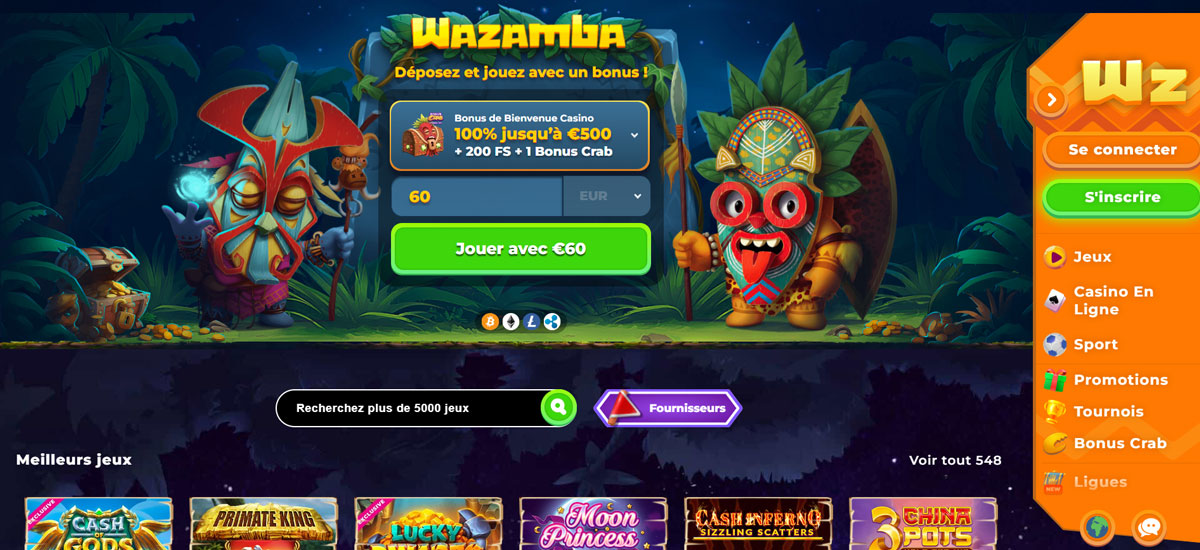
When I initially landed on the Wazamba Casino login page tailored for Swiss players, I immediately noticed how the platform positions privacy not as a dull legal footnote but as a set of choices you actively manage. As someone who has created accounts at more than a dozen online casinos, I can assure you that the depth and transparency of privacy settings diverge enormously. Some operators tuck everything behind a single “accept all” button, while others provide you a dashboard where you can adjust data uses one by one. In this guide, I will walk you through how Wazamba Casino’s privacy controls measure up against common industry practices, centering on the real steps you follow from sign-up to daily login. I will discuss what information you hand over, how it is safeguarded, and which levers you can pull to stay in charge of your personal data. Because I am writing with a Swiss audience in mind, I will also point out where Wazamba’s approach aligns with the high expectations for data protection that players in Switzerland justifiably hold.
Why Privacy Settings Matter When Signing Up for an Online Casino
Each time you open an account at an online casino, you enter a relationship based on trust and data. You disclose your name, address, date of birth, payment details, and often copies of sensitive documents. What becomes to that information after you click “register” relies almost completely on the operator’s privacy framework and the choices they let you make. I have encountered casinos that automatically opt you into a dozen marketing channels and sell aggregated data to third parties, while others maintain your profile locked down by default. For a Swiss player, this carries extra weight because Switzerland has strong data protection traditions, and many of us anticipate the same rigour from entertainment platforms as we do from our banks. Good privacy settings do not just reduce spam; they reduce the risk of identity theft, unwanted profiling, and data breaches that could expose your gambling activity to employers, family members, or financial institutions.
Wazamba Casino arranges its privacy controls in a way that I consider more transparent than the industry average. During registration, you are not required into a single bundled consent. Instead, you come across separate checkboxes for different purposes, such as receiving promotional emails, SMS notifications, and sharing data with carefully selected partners. This granular approach enables you decide exactly which doors you want to open. I also value that the privacy policy is written in plain German on the Swiss-facing page, avoiding the legalese that makes many players simply scroll and accept. After you log in, the account settings area gives you a consolidated privacy dashboard where you can review those choices at any time. Compared to casinos that hide unsubscribe links or require you to contact support to change data permissions, Wazamba’s self-service model is a significant advantage.
An additional reason these options deserve your focus is that online casinos work under various regulatory umbrellas depending on where they are licensed. Wazamba Casino has a licence from a reputable jurisdiction, which sets baseline data protection obligations. However, the operator goes beyond the minimum by offering tools that let you control how your activity is used for internal analytics and personalisation. For me, the ability to switch off certain tracking features without sacrificing access to games or bonuses is a sign of a platform that values its players. When I measure this with smaller, unlicensed sites that provide no privacy toggles at all, the difference is stark. Taking ten minutes to adjust your privacy settings after your first login is one of the most sensible moves you can make as a new player in Switzerland.
The Account Creation Process: What Personal Data Wazamba Casino Gathers and the Reason
Upon visiting the Wazamba Casino login page at the Swiss-specific address, you can find a obvious registration button that initiates a multi-step form. I have completed this process myself, and I was struck by how the platform describes the purpose of each data field as you go. The first stage requests your email address, a robust password, and your chosen currency. Swiss players can usually select CHF, which is a handy touch that eliminates currency conversion fees later. At this point, you also select your account language; German is the logical default for the Swiss audience, but English and other options are present. The privacy notice shows up directly on the form, not tucked away behind a tiny link, and it shortly explains that your email will be used for account-related communication and, with your separate consent, for promotional offers. This upfront clarity is something I hardly ever see in the industry.
The next phase requests your personal details: full name, date of birth, residential address, and mobile number. Wazamba Casino requires this information to comply with anti-money laundering regulations and to verify that you are of legal gambling age in Switzerland. I always remind fellow players that providing accurate details here is not optional; discrepancies will cause delays during the identity verification step later. The form also inquires about your gender, which some casinos use for segmentation, but Wazamba lets you to skip this field or select a neutral option, which I regard as a privacy-friendly touch. Throughout the registration, you will see tooltips explaining why a piece of data is needed. For example, your address is linked to geolocation checks that confirm you are physically in Switzerland when you play, a requirement tied to the operator’s licensing conditions.
What makes this registration flow from many competitors is the instant introduction of privacy choices before you submit. You are given separate opt-in boxes for receiving bonuses via email, SMS marketing, and push notifications should you later use the mobile app. None of these boxes are pre-ticked, which aligns with Swiss expectations for explicit consent. I also noticed an option regarding the use of your gameplay data for personalised offers and game recommendations. You can accept or decline this without influencing your ability to play. After submission, you obtain a verification email that includes a link to activate your account. This double opt-in process is a security baseline that Wazamba handles smoothly, and it guarantees that no one can register using your email address without your knowledge.
Controlling Communication Preferences: Email, SMS, and Push Notifications
After you pass verification and start playing, your inbox and phone can quickly fill up with casino messages unless you take control early. Wazamba Casino gives you a dedicated communication preferences panel that I regard as one of the most flexible in the industry. When I first examined it, I found separate toggles for promotional emails, bonus alerts, tournament invitations, and newsletters. You can switch each channel on or off independently. There is also a master setting for transactional messages, which remain active because they cover critical updates such as deposit confirmations, withdrawal status, and security alerts. This separation ensures you never miss important account information while muting the marketing noise.
SMS notifications operate on a similar logic. You can opt in to receive time-sensitive offers via text, but the default is off, which protects both your privacy and your mobile plan. I particularly enjoy that Wazamba does not use your phone number for marketing without you explicitly agree during registration or later in the settings. Push notifications from the mobile app are managed through the app’s own permissions, and the casino’s privacy dashboard links directly to those controls. If you ever become overwhelmed, you can pause all promotional messages with a single click, and the https://www.t-online.de/region/berlin/id_100333624/berlin-die-besten-escape-rooms-preise-anfahrt-highlights.html change activates immediately. Compared to casinos that force you to click through multi-step unsubscribe processes or wait days for a suppression to activate, this instant control is a clear win for user autonomy.

Another aspect worth pointing out is how Wazamba handles communication frequency. Even when you opt into marketing, you can often select preferences for how often you want to hear from them, such as weekly digests instead of daily pushes. This is not a universal feature, so I recommend checking the current options on the official Swiss page after you log in. The casino also follows national opt-out registers and will suppress communications if you flag them as spam. I have tried the unsubscribe links in their emails, and they work reliably, removing you from the list within the timeframe promised in the privacy policy. For a Swiss player who values a clean digital environment, these granular controls change the casino from a potential nuisance into a service that adjusts to your boundaries.
Verifying Your Identity: The KYC Procedure and File Handling
No conversation of casino confidentiality is thorough without looking at how the operator manages the most confidential information you will ever provide: your identity documents. Wazamba Casino uses a Know Your Customer system that is common for licensed platforms, but I find its document-handling approaches more privacy-conscious than many. After your first deposit or when your cumulative withdrawals reach a certain threshold, you will be asked to upload a clear copy of a government-issued ID, such as a passport or Swiss identity card. You will also have to provide a recent utility bill or bank statement that displays your name and address, aligning with the details you provided at registration. In some cases, the casino may request a photo of the payment method you used, with certain digits hidden for safety.
What impressed me is the secure upload portal. Instead of sending documents via email, Wazamba Casino konto erstellen, which is a security concern, you submit everything through an protected web form inside your account. The files are transmitted over HTTPS and saved on servers with strict access controls. Wazamba’s privacy policy declares that verification documents are held only for as long as necessary and are then deleted. I also noticed that the support team never requests you to send confidential files through live chat or unencrypted channels, which is a red flag I have come across on less trustworthy sites. The verification team usually processes submissions within 24 hours, and you obtain a notification once your account is fully verified. During this waiting period, you can still game, but withdrawals are pending until the checks are complete.
For Swiss players, the KYC process also functions as a compliance step that conforms to anti-money laundering laws. Wazamba Casino uses automated tools to validate the authenticity of documents, but a human agent carries out the final review. If there is a mismatch, you will get a specific explanation rather than a generic rejection, so you can resolve the issue quickly. I always suggest players to ensure that their uploaded files are sharp and fully visible, as blurry images are the most common cause of delays. Once verified, your document status is indicated in your account, and you will not need to repeat the process unless your details change. This one-time effort unlocks higher withdrawal limits and proves that the casino takes its regulatory obligations seriously, which ultimately protects the entire player community.
Establishing Your Account Security: Credentials, 2FA, and Access Security
Once your account is operational, the first place I head to is the security settings. Wazamba Casino’s login page is just the gateway; what happens behind it dictates how safe your funds and data really are. The platform mandates a strong password policy during registration, requiring a mix of uppercase letters, lowercase letters, numbers, and special characters. I appreciate that the system gives you real-time feedback on password strength rather than letting you proceed with a weak choice. If you ever fear that your password has been compromised, you can change it directly from the account dashboard without needing to contact support. The process is instant, and you receive an email notification confirming the change, which acts as a tripwire against unauthorised modifications.
Two-factor authentication is the most powerful shield you can enable to your casino account, and Wazamba Casino offers it as an optional feature. I highly recommend activating it as soon as you log in for the first time. The setup process is straightforward: you scan a QR code with an authenticator app like Google Authenticator or Authy, and from that point on, every login demands a time-based one-time code. This means that if someone steals your password, they are unable to access your account without your phone. In my experience, many Swiss players are well acquainted with 2FA from banking and email, so adopting it here feels natural. The casino also offers backup codes that you should store offline in case you lose your device. Compared to casinos that rely solely on SMS-based verification, an authenticator app is more protected because it is not intercepted by SIM-swap attacks.
Further than passwords and 2FA, Wazamba monitors login patterns to identify suspicious activity. If you or someone else tries to log in from an unfamiliar device or location, the system may initiate a security check that requests additional verification. This is particularly applicable for Swiss players who move frequently or use VPNs. I have seen cases where the casino temporarily freezes an account after several failed login attempts and dispatches an alert to the registered email address. You can then open it by following a secure link. This automatic lockout mechanism is a standard protective measure, but Wazamba applies it with clear messaging so you are never left doubting what happened. The combination of these layers gives me confidence that the platform handles account security as gravely as a Swiss financial service would.
Managing Data Disclosure and External Access
One of the most opaque areas in online gambling is what happens to your data outside of the casino’s own servers. Wazamba Casino handles this with a data-sharing section that allows you to view which categories of third parties might get your information and, in some cases, opt out. The platform collaborates with payment processors, game providers, identity verification services, and marketing platforms. Each of these partners receives only the minimum data required to perform their function. For instance, a game studio obtains your player ID and bet history for that specific game, not your full profile. The privacy dashboard clarifies these relationships in plain language, and you can revoke consent for non-essential data sharing without sacrificing access to the core gaming experience.
Affiliate marketers and data analysis services are the two areas where I exercise the most prudence. Wazamba lets you to disable the usage of your information for behavioral analysis and algorithmic decisions that would impact the offers you see. This is not to say you stop receiving bonuses; it merely means the deals are not customized based on your gaming habits. I find this preference particularly beneficial because it lessens the sense of being monitored. The casino also declares that it does not trade personal data to outside companies for their own own utilization, which matches the stricter requirements of Swiss data protection. If you prefer to go a step ahead, you can submit a request for a data portability transfer that reveals exactly what data Wazamba keeps about you, a right that is guaranteed in many privacy rules and that the casino fulfills through a simple request method.
For players who use social media logins or connect their accounts to loyalty programmes, Wazamba provides clear boundaries. You can link your account to a Facebook or Google profile for quicker login, but the casino does not collect your friend list or share on your behalf. You continue in control of what is transmitted back to the social platform. I also appreciate that the privacy settings contain a cookie management tool on the website itself, which enables you modify tracking and functional cookies separately. This is especially relevant for Swiss players who enter the casino from shared or work devices. By taking a few minutes to examine these third-party permissions, you create a fortress around your data that few other entertainment platforms deliver with such clarity.
How to Handle In Case You Forget Your Password or Are Locked Out
With the best privacy settings, a lapse in memory can prevent access of your account. I have experienced this, and the recovery process at Wazamba Casino is designed to let you back in without compromising security. On the Swiss login page, you will see a “Forgot password?” link that triggers a reset. You provide your registered email address, and within seconds you obtain a message containing a one-time reset link. This link becomes invalid after a short period, usually an hour, which guards against it from being misused if someone else gets access to your inbox. I always suggest players to check their spam folder if the email does not appear, but the delivery has been dependable in my tests.
If you have two-factor authentication enabled and you lose access to your authenticator app, the recovery path needs a bit more effort, and justifiably. Wazamba offers backup codes during the 2FA setup that you can use to skip the code requirement. If you did not store those codes, you will need to contact customer support and confirm your identity through an alternative verification process. This usually involves answering security questions or providing a photo of your ID again. The support team is accessible via live chat directly from the login page, and they handle such requests with urgency. I advise storing your backup codes in a password manager or a physical safe place, because this small step can avoid hours of downtime.
Account lockouts can also happen if the casino’s security system flags unusual activity. In these cases, you will notice a specific message on the login screen rather than a generic error. The message directs you to contact support or check your email for unlock instructions. Wazamba’s approach here is more useful than many casinos, which simply display “login failed” and leave you guessing. Once you regain access, I suggest immediately reviewing your login history and active sessions, a feature present in the account security area. This enables you to spot any unfamiliar logins and stop them. The entire recovery flow protects your privacy by never exposing sensitive details in plain text and by requiring proof of ownership at every step, which is exactly what a security-conscious Swiss player should expect.